Views: 0 Author: Site Editor Publish Time: 2025-11-18 Origin: Site


Voltage instability is a common problem in everyday power use and industrial environments, affecting not only equipment performance but also potentially shortening its lifespan. As a key device for ensuring voltage stability, how should you choose a voltage regulator? Below, we'll start with several core parameters to help you quickly identify the right regulator.
1. Input Voltage Range: Adaptable to Different Power Grid Environments
Standard Range: 150V–250V (Suitable for most areas)
Custom Wide Range: 110V–250V, 90V–260V, 60V–250V, etc. (Suitable for scenarios with large voltage fluctuations, such as remote areas or older power grids)
Note: A wider voltage range generally means higher costs. It is recommended to choose based on the actual power grid conditions.
2. Protection Functions: Ensuring Safe Equipment Operation
Basic Protection: High voltage protection, low voltage protection, overload protection, short circuit protection
Optional Protection: High temperature protection, surge protection (can be customized and added or removed)
Application Scenarios: Surge and high temperature protection are recommended for industrial equipment and precision instruments to prevent sudden voltage surges.
3. Capacity Range: Meets diverse power requirements
Single-phase voltage stabilizer: 500VA–60KVA (Residential, small commercial)
Three-phase voltage stabilizer: 9KVA–150KVA (Medium-sized machinery)
High-power three-phase voltage stabilizer: 50KVA–2500KVA (Factory, large power system)
4. Voltage Stabilizer Type: Motor type vs. Relay-type
Motor-type (SVC/TND/TNS series)
Accuracy: Rated voltage ±3%
Features: Motor-driven adjustment, slower response, suitable for high-power loads, higher noise
Applications: Factory machine tools, large motors, and other equipment with high power requirements but low precision requirements
Relay-type (AVR series)
Accuracy: Rated voltage ±10%
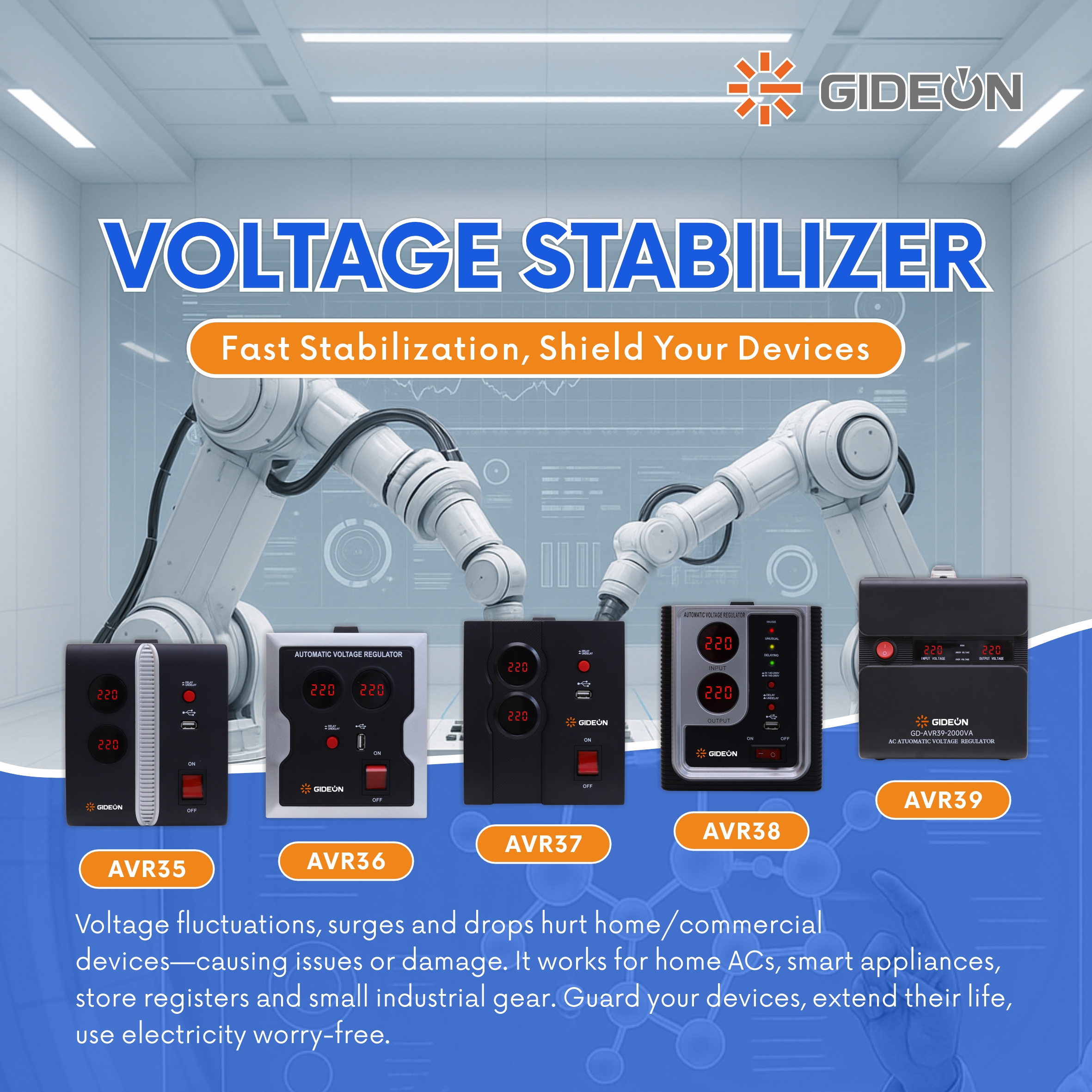
Features: Relay switching, fast response, high precision, low noise
Applications: Medical equipment, laboratory instruments, servers, and other applications requiring high voltage stability
5. Display Method: Real-time monitoring of voltage status
Pointer type: Traditional and intuitive
LCD/LED: Digital display, clearer information
Multi-functional color screen: Optional for advanced models, supporting multi-parameter display
6. Output Accuracy: Understanding the meaning of "±10%"
Relay-type: Output voltage fluctuates between ±5% and ±10% of the nominal value.
Motor-type: Smaller fluctuation range, generally ±3%.
Example: If the nominal voltage is 220V, the actual output of a relay-type voltage regulator may be between 198V and 242V.
Choosing the right voltage regulator is crucial for the stable operation and long lifespan of electronic systems. Hopefully, this guide will help you make an informed choice based on your specific needs.